
 Our products
 Aromatherapy - essential oils
 Essential oils
 Aroma lamps
 Aroma Diffusers
 Seeds
 Vegetables
 Herbs and spices
 Ornamental Plant Seeds
 Grass mixtures
 Sprouts and microgreens
 Growing supplies
 Cultivation and Gardening Supplies
 Hydroponics and indoor growing
 Protective equipment and gardening tools
 Exotic plants
 Exotic Fruit and Vegetables
 Exotic herbs
 Exotic trees and shrubs
 Ornamental exotic plants
 Roasted coffee
 Espresso coffee
 Ecological coffee preparation
 Thermal mugs and coffee cups
 Aeropress
 Thermos flasks and thermal mugs for coffee and tea
 Moka pot
 Filter coffee
 Coffee blends
 Accessories for coffee makers
 Water filtration
 Coffee grinders
 Cleaning the Coffee Maker
 Ecological Cleaning of Coffee Machines
 Coffee makers
 Coffee Preparation
 Coffee Accessories
 Food products
 For wildlife and pets
 Chocolate and others
 Hemp food products
 Natural cosmetics
 Hemp cosmetics
 Smoking supplies
 Bongs - water pipes
 Blunts and tubes
 E-liquids with Terpenes and CBD
 Grinders and Mills
 Papers and filters
 Smoking accessories
 Vaporizers
 Air fresheners
 CBD and CBG products
 CBD sprays
 CBD and CBN crystals
 CBD body and facial care
 Weeds
 CBD suppositories and capsules
 CBD oils and drops
 CBG oils and drops
 House and garden
 Fashion and Decoration
 Kitchen essentials and cooking
 Christmas Decorations and Accessories
 Gift Sets
 Bird feeders
 Seasonal and Special Tools
Essential oils can be a gentle and natural aid for evening relaxation and better sleep. Recent studies show that scents such as lavender or peppermint may help with relaxation and support quality sleep. In this article, you'll find an overview of research, safe methods of use, and tips on how to incorporate oils into your evening routine for a more peaceful night.
In short: Add 3–5 drops of essential oil to a diffuser about 30 minutes before bedtime to create a calming atmosphere for sleep. A 2021 lavender study and a meta-analysis of over 30 studies link aromatherapy with relaxation and lower perceived stress. Always dilute oils in a carrier and patch test for 24 hours first.
| Diffuser dose | 3–5 drops, roughly 30 minutes before bedtime |
|---|---|
| Bath | 5–8 drops mixed with a carrier oil or bath salt |
| Massage | 2–3 drops per tablespoon of almond or coconut oil |
| Patch test | Diluted mixture on the forearm, observe for 24 hours |
| Research base | 2021 lavender study; meta-analysis of more than 30 studies |
| Most used oils | Lavender, peppermint, eucalyptus and calming blends |
Do you have trouble sleeping? You're not alone. More and more people are looking for natural and gentle ways to calm the mind in the evening and prepare the body for rest. Essential oils – for example lavender or peppermint – can help create a pleasant atmosphere that promotes relaxation before sleep.
✨In this article, updated for 2025, we'll look at the latest scientific findings, the most commonly used oils, and safe methods of use that you can easily try at home.
Table of Contents
- Why quality sleep is important
- What are essential oils
- What research and studies show
- How oils affect sleep
- Most commonly used oils for sleep
- Methods of use
- Safety and recommendations
- Conclusion
Why Quality Sleep Is Important
Quality sleep is a fundamental pillar of overall well-being. It affects our energy, concentration, and how we feel throughout the day. When we have trouble falling asleep or wake up repeatedly during the night, it can lead to fatigue and disruption of our daily rhythm.
That's precisely why many people are looking for gentle methods that can support evening relaxation and create a pleasant atmosphere for better rest – without unnecessary chemicals and side effects.
What Are Essential Oils
Essential oils are concentrated, fragrant extracts from plants. They are most commonly obtained through gentle distillation or pressing of flowers, leaves, bark, or roots.
Oils such as lavender, peppermint, or eucalyptus are popular for their pleasant aroma, which is often associated with relaxation, calming, and creating a pleasant evening atmosphere. They can thus bring a peaceful environment before sleep.
What Research and Studies Show
Research from recent years suggests that certain essential oils may support feelings of relaxation, which is often associated with a more pleasant evening routine.
A 2021 study, for example, examined the effects of lavender oil on young adults and showed that aromatherapy can contribute to pleasant falling asleep and a subjective feeling of rest upon waking.
A meta-analysis of more than 30 studies additionally indicates that aromatherapy may help reduce perceived stress and tension, which often affect the quality of evening relaxation.
How Oils Affect Sleep
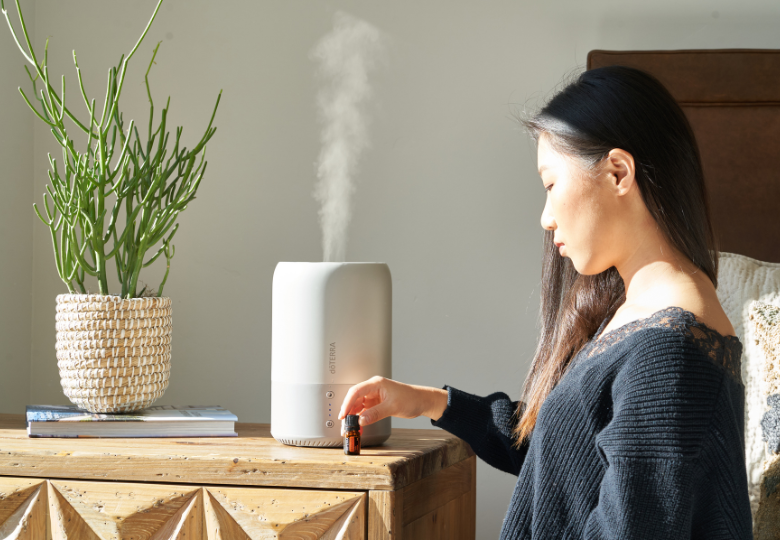
🌿Woman using an aroma diffuser with essential oil as part of her evening relaxation routine.
According to research, essential oils can influence the perception of relaxation in several ways:
Fragrance: Aromatic compounds affect the olfactory nerves and brain – especially the limbic system, which is connected to emotions and overall calming before sleep.
Composition: Some natural compounds (e.g., linalool in lavender) are associated with calming aromatic effects.
Supporting Evening Routine: Fragrance can help create a regular ritual before sleep, which the body perceives as a signal to rest.
Most Commonly Used Oils for Sleep
💜Lavender: Among the most popular oils for evening relaxation. Its gentle fragrance brings a feeling of calm and prepares the body for rest.
🍃Peppermint: Refreshing aroma helps relax both mind and body, which can be useful before sleep.
🌬️Eucalyptus: Its fresh fragrance supports comfortable breathing – which is especially useful with a stuffy nose that can disrupt sleep.
✨Oil Blends: Combinations of lavender, citronella, mint or other calming fragrances create a harmonious aromatic effect and can support a relaxing atmosphere in the bedroom.
Methods of Use
Diffuser or Aroma Lamp:
Add 3–5 drops to a diffuser approximately 30 minutes before bedtime. The gentle fragrance will help create a pleasant atmosphere in the bedroom.
Bath:
Mix 5–8 drops of essential oil with a carrier oil or bath salt and add to warm water. A warm bath combined with the fragrance can support overall relaxation.
Massage:
Mix 2–3 drops in a tablespoon of almond or coconut oil and gently massage the neck, shoulders or feet area. A massage ritual can help calm both body and mind.
Pillow Spray:
Put water and a few drops of essential oil in a spray bottle, shake before use and lightly spray on pillows or household textiles. (Avoid direct contact with facial skin.)
⚠️Safety and Recommendations
When using essential oils, follow a few basic rules:
-
Always use diluted: Essential oils are highly concentrated, so apply them only in combination with a carrier oil or water.
-
Perform a sensitivity test: Before first use, apply a small amount of diluted mixture to the forearm and observe the reaction for 24 hours.
-
Usage: Essential oils are not intended for internal use unless their use is expressly recommended by a qualified professional.
Conclusion
Essential oils can be a pleasant and natural addition to your evening routine, helping to create a calmer atmosphere before sleep. Their use is simple – just choose a scent that suits you. Lavender, peppermint or their gentle blends are among the most popular choices.
When using them, always pay attention to the quality of oils and follow safe dilution and recommended practices.
Safety First
-
Always dilute: Never apply undiluted essential oils directly to skin. Use carrier oils such as jojoba, almond or coconut oil.
-
Test for sensitivity: Before first use, perform a patch test on a small area of skin to rule out allergic reactions.
-
Choose quality: Look for pure, therapeutic-grade essential oils without synthetic additives.
-
Caution during sensitive periods: Pregnant and breastfeeding women, children or people with chronic health conditions should consult a doctor before use.
-
Avoid contact with eyes and mucous membranes: If irritation occurs, rinse the area with water and discontinue use.
💡 Are you also interested in aromatherapy options for children? Read more about aromatherapy blends for peaceful children's sleep. -