
 Our products
 Aromatherapy - essential oils
 Essential oils
 Aroma lamps
 Aroma Diffusers
 Seeds
 Vegetables
 Herbs and spices
 Ornamental Plant Seeds
 Grass mixtures
 Sprouts and microgreens
 Growing supplies
 Cultivation and Gardening Supplies
 Hydroponics and indoor growing
 Protective equipment and gardening tools
 Exotic plants
 Exotic Fruit and Vegetables
 Exotic herbs
 Exotic trees and shrubs
 Ornamental exotic plants
 Roasted coffee
 Espresso coffee
 Ecological coffee preparation
 Thermal mugs and coffee cups
 Aeropress
 Thermos flasks and thermal mugs for coffee and tea
 Moka pot
 Filter coffee
 Coffee blends
 Accessories for coffee makers
 Water filtration
 Coffee grinders
 Cleaning the Coffee Maker
 Ecological Cleaning of Coffee Machines
 Coffee makers
 Coffee Preparation
 Coffee Accessories
 Food products
 For wildlife and pets
 Chocolate and others
 Hemp food products
 Natural cosmetics
 Hemp cosmetics
 Smoking supplies
 Bongs - water pipes
 Blunts and tubes
 E-liquids with Terpenes and CBD
 Grinders and Mills
 Papers and filters
 Smoking accessories
 Vaporizers
 Air fresheners
 CBD and CBG products
 CBD sprays
 CBD and CBN crystals
 CBD body and facial care
 Weeds
 CBD suppositories and capsules
 CBD oils and drops
 CBG oils and drops
 House and garden
 Fashion and Decoration
 Kitchen essentials and cooking
 Christmas Decorations and Accessories
 Gift Sets
 Bird feeders
 Seasonal and Special Tools
A clean home doesn't have to mean using harsh chemicals. Natural cleaning is gaining increasing popularity because it's gentle on your household and the environment. Essential oils can pleasantly scent your interior and support the freshness of your home. In this article, you'll find tips on which oils are most commonly used for cleaning, how to make simple natural cleaning mixtures, and how to safely apply them in everyday household care.
In short: The essential oils most often used for natural cleaning are lemon, tea tree, lavender, eucalyptus and peppermint. A basic all-purpose spray combines 1 cup of white vinegar, 2 cups of water and 10–15 drops of citrus oil. Use about 10–20 drops per 500 ml of solution and test it on a small hidden area first.
| Recommended dilution | 10–20 drops per 500 ml of solution |
|---|---|
| All-purpose spray | 1 cup white vinegar, 2 cups water, 10–15 drops citrus oil |
| Paste for stubborn dirt | 1 cup baking soda, 1/2 cup lemon juice, 10 drops tea tree oil |
| Air freshener | 5–10 drops in a diffuser or aroma lamp |
| Storage | dark glass bottles, cool place, out of reach of children and pets |
A clean home doesn't have to be associated with harsh chemicals. More and more people are choosing natural cleaning methods that are gentle on the household, health, and the environment. Essential oils can pleasantly scent your interior and support a feeling of freshness during regular cleaning.
✨ In this article, we'll look at why natural cleaning makes sense, which oils are most commonly used in cleaning rituals, and how to easily make your own cleaning blends. You'll also find practical recipes, tips for safe use, and inspiration for incorporating essential oils into everyday household care. The article has been updated for 2025 to offer the latest information and trends in natural cleaning.
Table of Contents
- Why Choose Essential Oils for Home Cleaning?
- Best Essential Oils for Cleaning
- Simple Recipes for Homemade Cleaning Products
- Tips for Safe and Effective Use
- What Do the Latest Studies Say?
- FAQ: Natural Cleaning with Essential Oils
- Conclusion
Why Choose Essential Oils for Home Cleaning?
Essential oils can be a pleasant natural support during cleaning. They're fragrant, gentle, and help create a fresh atmosphere in your home.
Gentle on Your Home and the Environment:
They're free from synthetic fragrances and can be a suitable choice for those looking for a gentler alternative to conventional cleaning scents.
Traditionally Used in Cleanliness Care:
Oils such as tea tree, lemon, or eucalyptus are often used in aromatherapy for rituals focused on feelings of cleanliness and freshness. Some of them are subjects of research examining their potential antimicrobial properties.
Pleasant and Natural Fragrance:
Natural aromas can make cleaning more enjoyable and create a harmonious, fresh, and calming atmosphere at home.
Best Essential Oils for Cleaning
- Tea tree oil – Traditionally used in cleaning rituals focused on a sense of purity. It's popular for its distinctive, fresh scent.
- Lemon oil – Has a fresh citrus aroma that can beautifully revive the interior. Often used when cleaning the kitchen and surfaces, where it helps support the feeling of degreased and fresh areas.
- Lavender oil – Fills the home with a gentle floral fragrance. In aromatherapy, it's also used to neutralise unwanted odours.
- Eucalyptus oil – Is associated with a feeling of cleanliness and freshness, making it very popular in bathrooms and places where you'll appreciate a slightly "clean" touch.
- Peppermint oil – Has a distinctly fresh scent that refreshes the space and can provide energy during cleaning. Suitable for the kitchen, study, or for a morning cleaning start.
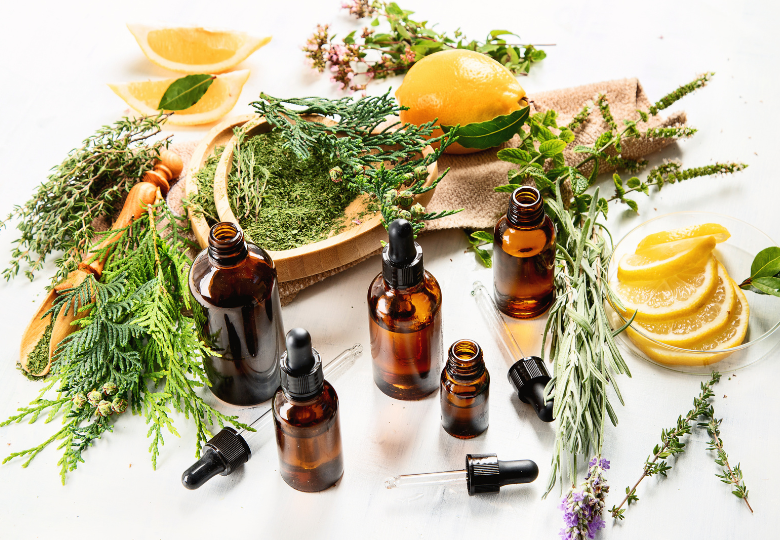
🍋Natural ingredients and brown glass bottles with essential oils, surrounded by herbs and citrus fruits used in natural cleaning.
Simple Recipes for Homemade Cleaning Products
🧴 Universal Cleaning Spray (for routine surface cleaning)
- 1 cup white vinegar
- 2 cups water
- 10–15 drops of citrus essential oil (e.g. lemon, orange)
Pour the mixture into a spray bottle and use on kitchen counters, tiles, floors, or glass surfaces. Citrus oils add a gentle fresh fragrance.
🧼 Natural Paste for Stubborn Dirt
- 1 cup baking soda
- 1/2 cup lemon juice
- 10 drops of tea tree oil
Mix to create a thicker paste. Apply to the soiled area, leave to work for a while, then rinse. The paste is suitable for sinks, cookers, or bathtubs, for example.
🍋 Air Freshener with Essential Oils
- 5–10 drops of lavender, citrus or peppermint oil
- diffuser or aroma lamp
After cleaning, it fills your home with a pleasant, fresh scent and creates a feeling of clean space.
Tips for Safe and Effective Use
-
Store essential oils in a cool, dark place and always out of reach of children and pets.
-
Follow recommended dilution – for homemade cleaning solutions, 10–20 drops per 500 ml of solution is usually sufficient.
-
Test the mixture on a small inconspicuous area, especially if you're using it on delicate or special surfaces. Each material may react differently.
What Do the Latest Studies Say?
Recent research from recent years shows that essential oils continue to be the subject of scientific interest – particularly from the perspective of their aromatic properties and potential use in natural cleaning products. Studies focus, for example, on the composition of essential oils, the behavior of their scents under various conditions, or their suitability for different types of preparations.
Oil combinations such as rosemary, eucalyptus or clove, which are traditionally used in homemade cleaning solutions, are also being investigated. Research also explores modern methods, such as nanoencapsulation, which can improve scent stability and the overall longevity of oils in cleaning formulations.
FAQ: Natural Cleaning with Essential Oils
🌸 Can essential oils replace regular cleaning products?
Essential oils can be a pleasant complementary component of natural cleaning – they add fragrance and support a feeling of freshness. However, they do not fully replace the effects of specialized cleaning products.
🌸 Which essential oils are most commonly used in natural cleaning?
Popular choices include lemon, orange, lavender, eucalyptus, peppermint and tea tree. They are valued for their aroma and traditional use in cleaning rituals.
🌸Is it safe to use essential oils in households with children or pets?
Yes, but with caution. Always store oils out of reach of children and pets, dilute them properly and apply only where there is no risk of contact with skin or mucous membranes. Some oils may be more sensitive for animals, so it is advisable to use them in well-ventilated rooms.
🌸Can I use essential oils on all types of surfaces?
Not always. Before use, test the mixture on a small inconspicuous area. Delicate surfaces (e.g. varnished wood, stone, some plastics) may react differently.
🌸How should I store cleaning mixtures with essential oils?
Ideally in dark glass bottles, away from direct light and at a stable temperature. This helps preserve their fragrance and quality.
🌸How many drops of essential oil should I use in a homemade cleaning spray?
Usually 10–20 drops per 500 ml of solution is recommended. Always maintain proper dilution.
Conclusion
Essential oils can be a pleasant and natural part of cleaning rituals. They help scent your home, promote a feeling of freshness and make routine cleaning more enjoyable. Try simple natural blends and give your home a gentle touch of nature. However, always ensure proper dilution, safe handling and quality ingredients.