Our products
 Aromatherapy - essential oils
 Essential oils
 Aroma lamps
 Aroma Diffusers
 Seeds
 Vegetables
 Herbs and spices
 Ornamental Plant Seeds
 Grass mixtures
 Sprouts and microgreens
 Growing supplies
 Cultivation and Gardening Supplies
 Hydroponics and indoor growing
 Protective equipment and gardening tools
 Exotic plants
 Exotic Fruit and Vegetables
 Exotic herbs
 Exotic trees and shrubs
 Ornamental exotic plants
 Roasted coffee
 Espresso coffee
 Ecological coffee preparation
 Thermal mugs and coffee cups
 Aeropress
 Thermos flasks and thermal mugs for coffee and tea
 Moka pot
 Filter coffee
 Coffee blends
 Accessories for coffee makers
 Water filtration
 Coffee grinders
 Cleaning the Coffee Maker
 Ecological Cleaning of Coffee Machines
 Coffee makers
 Coffee Preparation
 Coffee Accessories
 Food products
 For wildlife and pets
 Chocolate and others
 Hemp food products
 Natural cosmetics
 Hemp cosmetics
 Smoking supplies
 Bongs - water pipes
 Blunts and tubes
 E-liquids with Terpenes and CBD
 Grinders and Mills
 Papers and filters
 Smoking accessories
 Vaporizers
 Air fresheners
 CBD and CBG products
 CBD sprays
 CBD and CBN crystals
 CBD body and facial care
 Weeds
 CBD suppositories and capsules
 CBD oils and drops
 CBG oils and drops
 House and garden
 Fashion and Decoration
 Kitchen essentials and cooking
 Christmas Decorations and Accessories
 Gift Sets
 Bird feeders
 Seasonal and Special Tools
Healthy, strong and naturally shiny hair? A wish that most of us share. Stress, seasons, hormones and improper care can cause hair to weaken or fall out more. Natural essential oils are popular for their gentleness and traditional use in scalp care. In this article, you'll discover which oils are worth trying, how to use them safely, and how to turn your regular hair care routine into a simple and pleasant ritual.
Did you know that a few drops of natural oil can be a gentle addition to your daily hair care routine? Essential oils have been used for centuries in natural hair and scalp care. Their fragrance can also make your self-care moments more enjoyable – and who wouldn't want to combine hair care with a small aromatherapeutic ritual?
In this article, we'll explore why hair sometimes falls out more or looks tired, how you can gently support it, and which essential oils are most commonly used in natural hair care. We'll also add simple recipes for homemade blends, tips for safe oil use, and advice on creating a hair care routine that works long-term.
Article Contents
- Why Hair Falls Out and How to Gently Help
- Most Commonly Used Essential Oils for Hair
- Essential Oil Blends for Hair Care
- How to Properly Use Essential Oils on Hair
- Tips and Tricks for Healthy and Shiny Hair
- Frequently Asked Questions (FAQ) About Essential Oils for Hair
- Give Your Hair the Best of Natural Care
Why Hair Falls Out and How to Gently Help
Hair can fall out more for many reasons. Often it's due to stress, hormonal fluctuations, postpartum period, unsuitable cosmetics, or lack of important nutrients. Daily habits also play a role – frequent coloring, straightening with flat irons, or overly tight hairstyles.
Tip for related articles: Aromatherapeutic blends: Natural Help for Hormonal Imbalance in Women or Anti-Stress Rituals with Essential Oils: Calming the Mind and Relaxing the Body.
What Generally Benefits Hair?
- Balanced diet: Include foods rich in biotin, vitamin E, iron and zinc.
- Gentle care: Limit frequent colouring, aggressive bleaching and high temperatures when blow-drying or straightening.
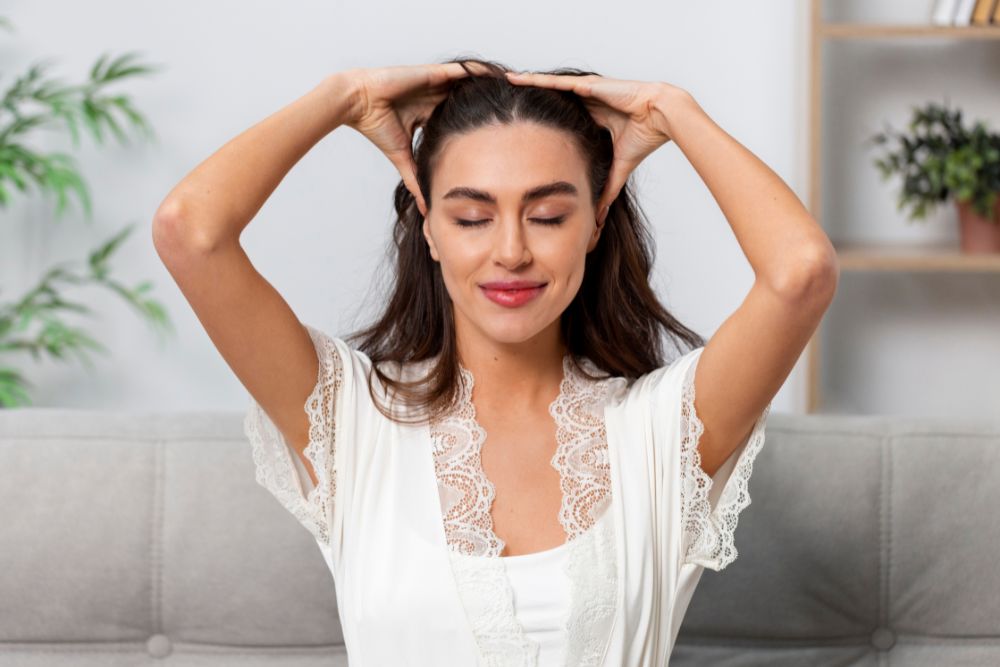
- Scalp massage: A gentle massage can support scalp circulation and enhance your evening ritual.
- Natural care: Essential oils are traditionally used in scalp care as a complement to regular cosmetics.
| What Can Stress Hair | What You Can Consider |
|---|---|
| Long-term stress and tension | Relaxation, gentle hair care rituals, aromatherapy for evening calming |
| Unbalanced diet and lack of sleep | Dietary adjustments, plenty of fluids and regular rest |
| Frequent straightening, curling and hot air blow-drying | Lower temperatures, heat protection, more natural air drying |
| Tight ponytails and buns | Looser hairstyles, gentle hair ties without metal parts |
Most Commonly Used Essential Oils for Hair
Some essential oils have become popular precisely for their traditional use in scalp care and overall hair appearance. Each has a slightly different aroma and properties – you can choose them according to what your hair and scalp currently need.
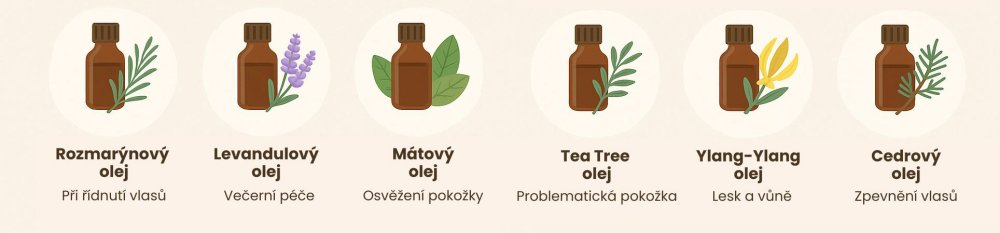
- Rosemary oil: Often sought after in natural care for fine or weak hair.
- Lavender oil: Gentle, soothing fragrance, suitable for evening scalp care rituals.
- Peppermint oil: Pleasantly cooling aroma, popular with people experiencing oilier scalp.
- Tea tree oil: Traditionally used in natural cosmetics for scalp care, especially when refreshment is needed.
- Ylang-ylang: Exotic floral fragrance, sought after in care for dry and dull hair.
- Cedarwood oil: Warm woody fragrance, popular in natural care for dry or limp hair.
Not sure where to start? A common choice is lavender oil – it has a gentle aroma and is usually well tolerated even by sensitive skin (always diluted and after a tolerance test, of course).
Essential oil blends for hair care
Essential oils can be used individually or combined with each other. However, it's always important to dilute them in a carrier oil, such as coconut, jojoba or almond oil.
Blend for gentle scalp massage
- 3 drops rosemary oil
- 3 drops lavender oil
- 2 drops peppermint oil
- 2 drops tea tree oil
Mix the blend with approximately 2–3 tablespoons of carrier oil and gently massage into the scalp. Leave on briefly and then wash hair as usual.
Blend for elasticity and shine
- 4 drops ylang-ylang
- 3 drops lavender oil
- 2 drops cedarwood oil
This blend is popular for dry or stressed hair that appears dull. Apply it to the lengths of hair before washing or as a pre-wash oil treatment.
Blend for Hair Refresh and "Restart"
- 3 drops of rosemary oil
- 3 drops of lavender oil
- 3 drops of lemon oil
This blend is popular, for example, after winter, holidays, or more demanding periods when hair looks tired. Always dilute it well with a carrier oil.
How to Properly Use Essential Oils on Hair
Essential oils can be incorporated into your hair routine in several ways. Choose one that will be realistic and pleasant for your regular day.
Don't forget: Before first application to a larger area of skin, always perform a tolerance test – drop a small amount on a small area of skin and wait 24 hours.
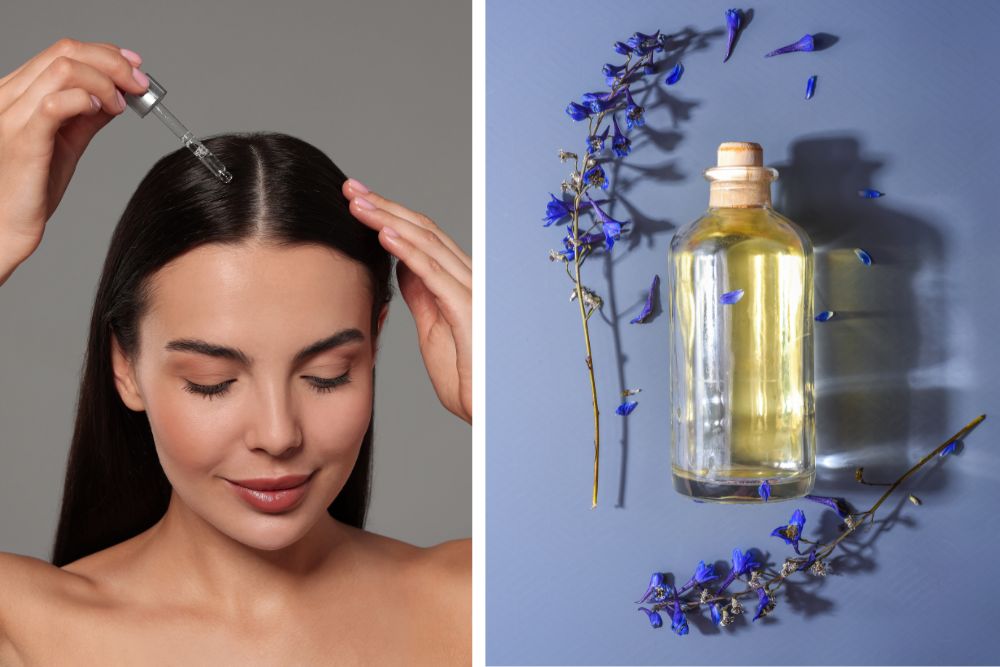
- Scalp massage: Before washing your hair, apply a few drops of a blend of essential and carrier oils to your scalp and gently massage it in. This creates a short relaxing ritual before showering.
- Oil mask for lengths: Apply the blend to the lengths and ends of your hair, leave it on for at least 30 minutes (or overnight on a towel) and then wash thoroughly with shampoo.
- Adding to shampoo: For quick use, you can add 1–2 drops of essential oil to a portion of shampoo directly in your palm – never mix large amounts of oil directly into the entire bottle.
Tips and Tricks for Healthy and Shiny Hair
Besides natural care with oils, daily habits also play a major role. Sometimes just a few small changes are enough, which together will show in the appearance and feel of your hair.
- Drink plenty of water and enjoy a balanced diet rich in vitamins and minerals.
- Wash your hair with lukewarm, not hot water and try to limit blow-drying at the highest temperatures.
- Protect your hair from harsh sun – a hat, scarf or staying in the shade will help.
- Don't forget regular trimming of the ends.
- Avoid overly tight hairstyles and hair ties that break the hair.
Too much shampoo, daily straightening without protection, combining aggressive bleaching with high blow-dryer temperatures, or using too many products at once can unnecessarily burden the hair.