
 Our products
 Aromatherapy - essential oils
 Essential oils
 Aroma lamps
 Aroma Diffusers
 Seeds
 Vegetables
 Herbs and spices
 Ornamental Plant Seeds
 Grass mixtures
 Sprouts and microgreens
 Growing supplies
 Cultivation and Gardening Supplies
 Hydroponics and indoor growing
 Protective equipment and gardening tools
 Exotic plants
 Exotic Fruit and Vegetables
 Exotic herbs
 Exotic trees and shrubs
 Ornamental exotic plants
 Roasted coffee
 Espresso coffee
 Ecological coffee preparation
 Thermal mugs and coffee cups
 Aeropress
 Thermos flasks and thermal mugs for coffee and tea
 Moka pot
 Filter coffee
 Coffee blends
 Accessories for coffee makers
 Water filtration
 Coffee grinders
 Cleaning the Coffee Maker
 Ecological Cleaning of Coffee Machines
 Coffee makers
 Coffee Preparation
 Coffee Accessories
 Food products
 For wildlife and pets
 Chocolate and others
 Hemp food products
 Natural cosmetics
 Hemp cosmetics
 Smoking supplies
 Bongs - water pipes
 Blunts and tubes
 E-liquids with Terpenes and CBD
 Grinders and Mills
 Papers and filters
 Smoking accessories
 Vaporizers
 Air fresheners
 CBD and CBG products
 CBD sprays
 CBD and CBN crystals
 CBD body and facial care
 Weeds
 CBD suppositories and capsules
 CBD oils and drops
 CBG oils and drops
 House and garden
 Fashion and Decoration
 Kitchen essentials and cooking
 Christmas Decorations and Accessories
 Gift Sets
 Bird feeders
 Seasonal and Special Tools
How are quality essential oils made? 🌿 Explore the secrets of distillation and cold pressing, discover the differences between methods, and find out what determines the quality of nature's fragrances.
In short: Most essential oils are made by steam distillation: steam releases the aromatic compounds from plants such as lavender, eucalyptus or tea tree, is then cooled, and the oil separates from the water. Citrus oils are cold pressed from the peel without heat, and dry distillation without water is used for woods and resins.
Did you know that the method of producing essential oil affects its quality, scent and effects? Methods such as distillation and pressing have evolved over centuries into precise and refined crafts that combine the power of nature with modern technologies.
In this article, we'll look at how essential oils are made, what methods exist for obtaining them, why raw materials matter – and how the oils you can find in our e-shop are produced.
Table of Contents
- Raw Materials for Essential Oil Production
- Main Distillation and Extraction Methods
- Comparison of Methods
- Laboratory Distillation: Step by Step
- Popular Essential Oils and Their Production
- Summary: How Quality Essential Oils Are Made
Raw Materials for Essential Oil Production
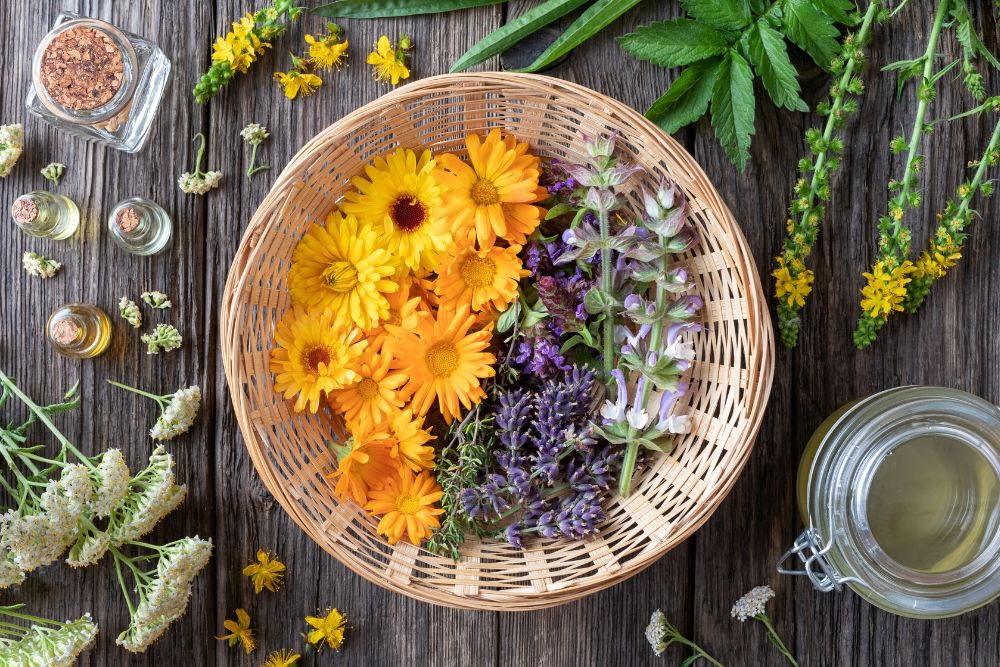
Essential oils are derived from natural raw materials that are rich in aromatic compounds.
They are obtained, for example, from flowers, leaves, fruits, resins or roots.
Quality is crucial – the fresher and more gently processed the plants, the fuller the fragrance and the higher the concentration of aromatic components.
The most common raw materials include:
- flowers (e.g. lavender, chamomile)
- leaves and herbs (mint, tea tree)
- citrus peel (lemon, orange, grapefruit)
- roots (ginger, vetiver)
- seeds (fennel, coriander)
- resins (myrrh, frankincense)
Gentle processing helps preserve the natural scent, taste and overall character of the oil, which is particularly valued in aromatherapy.
Main Distillation and Extraction Methods
Each plant requires its own specific approach. Some oils are obtained through steam distillation, others through pressing.
It's important to choose a method that preserves as many valuable substances as possible.
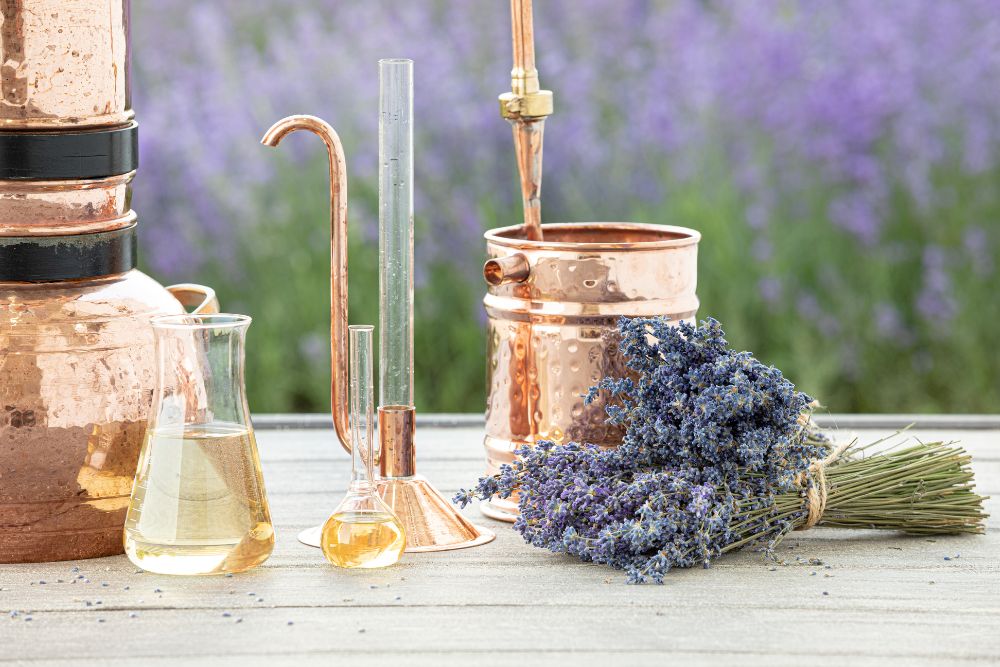
Steam Distillation of Essential Oils
The most common method for producing essential oils. Plants are heated using steam, which releases the aromatic compounds. These are then cooled and separated from the water.
💡 Practical tip: Steam distillation is ideal for lavender, eucalyptus or tea tree – plants that tolerate higher temperatures well.
Cold Pressing
Cold pressing of essential oils is used primarily for citrus fruits. The peels are mechanically pressed without heating, preserving the fresh aroma and high content of active compounds.
Cold pressing is gentle but more demanding – it's used especially for lemon, grapefruit or orange.
Dry Distillation
A specific method where the raw material is heated without water. It's mainly suitable for extracting oils from woods and resins.
It's used for example with vetiver or frankincense.
The difference between distillation and pressing lies not only in the use of temperature, but also in the type of extracted compounds and the resulting consistency of the oil. That's why it's always important to adapt the method to the specific plant.
Comparison of Methods
| Method | Suitable for | Benefits |
|---|---|---|
| Steam distillation | Herbs, flowers, leaves | Universal, efficient, traditional |
| Cold pressing | Citrus fruits | Gentle, preserves fresh aroma |
| Dry distillation | Wood, resins | Specific aroma, higher concentration |
Laboratory Distillation: Step by Step
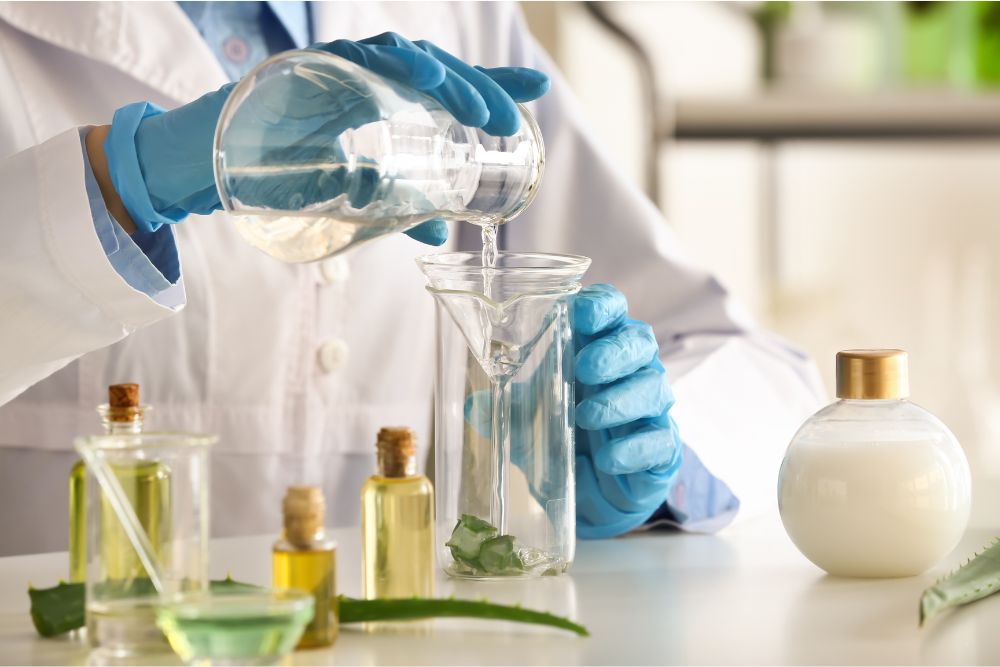
Laboratories use precise and sterile procedures that ensure maximum purity and quality of oils.
How does laboratory production of essential oils work?
- The plant material is first gently crushed.
- It is placed in a pressure vessel with water.
- Heating creates steam that carries the aromatic compounds.
- The steam is then cooled – separation produces the essential oil.
- The oil is filtered to remove any impurities.
The result is an essential oil that excels in its purity and natural quality – without synthetic additives.
Popular Essential Oils and Their Production
Every essential oil has its own story – from selecting the raw material to the extraction method. Below you'll find three popular oils and their brief characteristics:
🌿 Lavender Oil
Obtained through steam distillation of lavender flowers. It has a delicate, floral aroma and is popular for its scent that evokes a sense of calm and well-being.
🌱 Tea Tree Oil
Distilled from tea tree leaves. Traditionally used in natural skin care, especially thanks to its clean and fresh scent.
🌬️ Peppermint Oil
Obtained through distillation of peppermint leaves. It's valued for its fresh scent with a cooling note, often used in aroma diffusers or natural home care.
Summary: How Quality Essential Oils Are Made
The production of essential oils is a complex process that combines growers' experience, traditional knowledge, and modern approaches. Every detail – from harvest to method selection – is reflected in how the oil smells and what overall impression it leaves when used.
Try it for yourself
Browse our range of essential oils and choose the one that appeals to you. Whether you're looking for a natural fragrance for relaxation, refreshment or gentle skincare – you'll find 100% natural quality with verified origin here.